

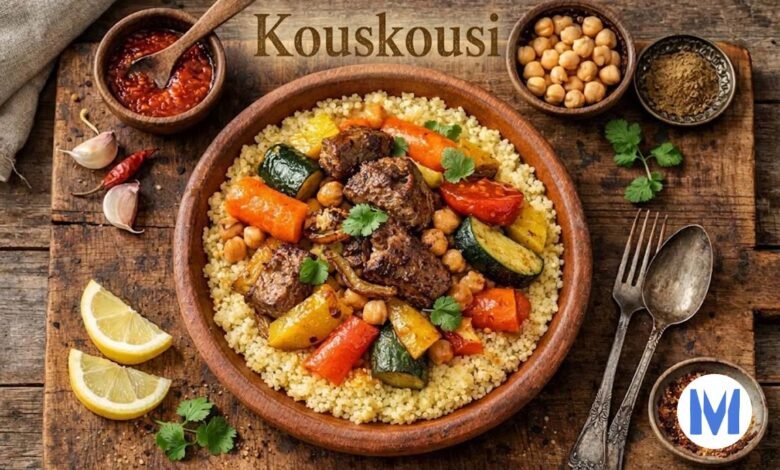
In the busy world of food, where famous dishes travel from small village kitchens to restaurant menus across the globe, some names stay quiet until a curious cook asks about them. Kouskousi is one of those names. For many people, it is simply another spelling of couscous, the light and fluffy steamed grains loved across North Africa. For others, it is a tiny Greek pasta that cooks fast and soaks up flavor like a sponge. Both meanings are real, and both are delicious. In this friendly guide, you will learn where the word comes from, how each style is made, whether it is healthy, and how to cook it at home without any stress.
What Is Kouskousi?
This word has more than one story. In many online recipes and food blogs, kouskousi is another spelling of couscous, a dish made from tiny granules of durum wheat semolina that are steamed until light and fluffy. The grains are not a whole grain like rice. Cooks make them by rolling semolina with a little water and shaping it into small pearls, which is why the finished dish feels so airy.
In Greek kitchens, the word points to something a little different. Here it means a small pasta, slightly bigger than North African couscous, which is usually simmered in a pot with broth or water instead of being steamed. Because the two foods look alike, people often mix them up. In both cases, the star is a small piece of wheat that carries flavor very well. Once you know the difference, it becomes much easier to pick the right one for your dinner table.
Where Does This Dish Come From?
The roots of kouskousi, or couscous, go back many centuries to the Berber communities of North Africa, in places we now call Morocco, Algeria, and Tunisia. People there made steamed wheat granules because the food was practical. It was easy to store, easy to carry, and enough to feed a large family with simple ingredients. In 2020, UNESCO added the skills and traditions around couscous to its list of cultural heritage, which shows how deeply people value it.
From North Africa, the dish traveled around the Mediterranean through trade, travel, and migration. Cooks in Sicily, Spain, France, and many other places made it their own and added local ingredients. The Greek pasta version is part of this wider Mediterranean story, even though it follows its own cooking method. Today you can find it in supermarkets almost everywhere, which proves how well a humble grain can travel.
Greek Kouskousi: Tiny Pasta With Big Flavor
This tiny round pasta looks like small pearls. Greek home cooks often simmer it in one pot with olive oil, vegetables, and a little broth until it turns tender and drinks up the liquid. One popular recipe from Greek chef and author Diane Kochilas uses chickpeas, Swiss chard, and ginger, and it serves four people. Prep takes about ten minutes, and the whole meal is ready in around half an hour.
The best part of this style is how flexible it is. You can add tomatoes, spinach, olives, or crumbled feta, and you can serve it as a main dish or a side. Because the pasta is small, it cooks quickly and works well on busy weeknights. Serve it warm with a little olive oil on top, and the dish tastes rich and satisfying. Many families love it because it is cheap, filling, and easy to change with whatever vegetables are in the fridge.
North African Kouskousi: A Meal to Share
In Morocco, Algeria, and Tunisia, couscous is much more than food. It often appears on Fridays after prayer, at weddings, and at big family gatherings. A large plate goes in the middle of the table, topped with soft carrots, zucchini, and turnips, and sometimes lamb, chicken, or fish. Everyone eats together, and the host makes sure nobody leaves hungry. Sharing the meal from one plate is a sign of warmth and welcome.
Each country has its own style. Moroccan cooks often add sweet touches like raisins and caramelized onions, while Tunisian versions can be spicy with harissa. Algerian cooks make many types, including sweet dishes with nuts and dried fruit. This rich variety shows that couscous is not one recipe but a whole family of recipes, and each home has its own favorite way to serve it.
How Kouskousi Is Made
The traditional method uses a couscoussier, a tall pot with two parts. The stew cooks in the bottom pot, while the grains sit in a steamer basket on top and soak up the smell of the stew. Cooks often steam the grains more than once, breaking up lumps with their fingers and sprinkling a little water or oil in between. This slow method gives the grains their light and fluffy shape.
Most people today use a faster way. Instant couscous only needs hot water or broth poured over it, then it rests under a lid for about five minutes before you fluff it with a fork. A spoon of olive oil and a pinch of salt help stop the grains from sticking. Whichever method you choose, never press the grains down, because pressing makes them heavy and sticky. The Greek pasta, on the other hand, is simply simmered, so you need to watch the pot and stir now and then.
Is This Dish Healthy?
Kouskousi can be a good part of a balanced diet. It gives you steady energy from carbohydrates, plus a small amount of protein and fiber, especially when you choose whole wheat versions. It also has some minerals, such as selenium. Because it is a plain base, the health value depends on what you serve with it. A plate full of vegetables and chickpeas is very different from a bowl covered in heavy sauce.
There is one important point to remember. Couscous and Greek pasta both come from wheat, so they contain gluten and are not safe for people with celiac disease. If you need a gluten free option, look for versions made from corn, rice, or other safe grains. Also watch your portion size if you count calories, and fill half the plate with vegetables.
Easy Tips for Cooking at Home
Start with good liquid. Use vegetable or chicken broth instead of plain water, and the flavor improves right away. Toast the dry grains or pasta in a little olive oil for a minute before adding liquid, because this adds a nutty taste. For the best kouskousi, always measure carefully, since too much liquid makes the dish soggy.
Finish with fresh touches. A squeeze of lemon, some chopped parsley or mint, and a spoon of olive oil can lift the whole bowl. Spices like cumin, cinnamon, and saffron suit the North African style, while oregano and dill fit the Greek style. If you cook extra, keep leftovers in the fridge for up to three days and warm them with a splash of water.
Final Thoughts
Kouskousi may have a simple name, but it carries a big story. It can mean the soft, steamed grains of North Africa that bring families together, or the tiny Greek pasta that turns a few pantry items into a warm dinner. Both styles are easy to love because they are affordable, flexible, and full of comfort. Now that you know the difference, you can read recipes with more confidence, shop with a clear idea, and cook with the right method. Start with a quick pot of instant couscous or a Greek pasta dish with chickpeas, then try a slow steamed version when you have time. However you cook it, share it with people you like, because that is what this dish has always been about.
Frequently Asked Questions
Is kouskousi the same as couscous?
Often yes. Many people use it as another spelling of couscous. In Greece, though, it often means a small pasta that is simmered in a pot.
Is it a grain or a pasta?
Couscous is made from semolina, so it is technically a type of small pasta. Many people still cook and eat it like a grain.
How long does it take to cook?
Instant couscous needs about five minutes. Steamed couscous in a couscoussier can take around 30 to 40 minutes. Greek pasta usually simmers for 10 to 15 minutes.
Is it gluten free?
No. It is made from wheat, so it contains gluten. Look for corn or rice versions if you need a gluten free meal.
What goes well with it?
Roasted vegetables, chickpeas, grilled chicken, lamb stew, and fish all work well. A little yogurt or harissa on the side adds extra flavor.



One Comment