

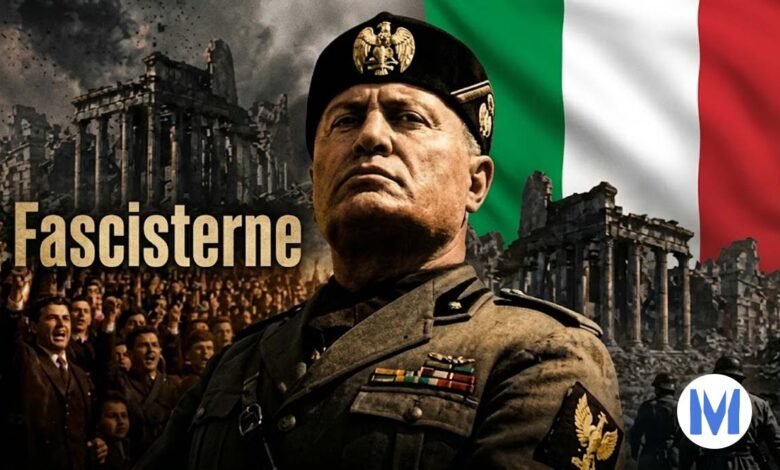
In the long story of European politics, where a single word can carry the weight of whole decades, some terms stay with us long after the people behind them are gone. Fascisterne is one of those words. You may have seen it in a search box, a history book, or an old Danish newspaper, and wondered what it really means and who it describes. The short answer is simple, but the full story is richer, and it is also easy to get wrong. Many websites repeat mistakes about it, so this guide uses careful sources to give you a clear, friendly, and honest picture.
What Fascisterne Means in Danish
Fascisterne is a Danish word, and it simply means “the fascists.” The ending “erne” is how Danish turns a noun into a definite plural, so the word works much like “the fascists” in English. It is not the name of a person, a city, or a brand. It is a plain label for people who followed fascism, a political idea that puts the nation and a strong leader above the freedom of the individual.
Because the word is so general, you can find it in many places. A Danish speaker might use it in a history class, in a news story about the 1930s, or in a debate about modern politics. English readers usually meet it when they see a Danish text and want a quick translation. That is why a short, clear definition is the best place to start, and everything else in this article builds on it.
Where the Word Comes From
The word fascism comes from the Italian word fascio, which means a bundle or a group. Benito Mussolini used the idea for his movement in Italy in the early 1920s, and it soon spread across Europe. Danish, like many other languages, took the term over and gave it its own endings. So the roots of the word are Italian, even though the form you are reading about here is Danish.
In the 1930s, small groups in Denmark copied ideas from abroad. Before the Nazis rose in Germany, minor local groups mostly imitated Italian fascism. After the Nazi success there, the focus moved toward national socialism. That change matters, because the Danish extreme right leaned more and more toward the German model, and the general word Fascisterne can hide that detail.
Cay Lembcke and the First Danish Nazi Party
Cay Lembcke was born in Copenhagen on 15 December 1885. He served as a captain in the Guard Hussars until 1923, when he resigned after a public disagreement with the government over cuts to the defence budget. He also helped found the Danish Boy Scouts in 1910 and wrote a Danish guide for young scouts. Later, he left the scout movement after long conflicts about his political and religious views.
After the Nazi party did well in the German election of September 1930, Lembcke founded the National Socialist Workers’ Party of Denmark on 16 November 1930. As far as sources show, no major Danish party officially used the name Fascisterne, but this is the best known party of that era, and the general word often points toward it. Lembcke led it only until July 1933, when the doctor Frits Clausen took over after weak results in the 1932 election.
Why Fascisterne Stayed Small in Denmark
Danish fascism never became a mass movement. Under Lembcke the party had only a few hundred members and won almost no votes in 1932. It grew later, with about 5,000 members in 1939 and around 21,500 in early 1943, but it still won only three seats in parliament in both 1939 and 1943. Constant splits and a close link to Germany made it hard for the party to look like a true Danish choice.
Denmark also had a stable democracy and a government led by the Social Democrats for most of this period, while the party itself was modeled on the German Nazi party, which limited its appeal. During the German occupation, which began on 9 April 1940, the party hoped to gain power with German help, but it never won the public over despite German money. It was banned on 8 May 1945, and Clausen died in prison in 1947.
Where Support Was Strongest
Even though support was small overall, it was not spread evenly. Historians point to Northern Schleswig, the border region in the south of Jutland, as the place where the party did best in elections between 1932 and 1943, with a few villages giving it more than a quarter of the votes. Frits Clausen, who took over in 1933, was a doctor from this area, and he was born in Aabenraa in 1893, when the town still belonged to the German Empire.
After the German occupation in April 1940, the party also spread to large cities such as Copenhagen. In 1941, it played a central role in forming a Danish volunteer unit of the Waffen-SS, which had around 6,000 men and was active until 1943. These facts show how closely the party tied itself to Nazi Germany, and they help explain why it was banned when the war ended.
Why Some Websites Get It Wrong
If you search for this keyword, you will find many pages that repeat the same errors. Some say Fascisterne was a Danish party founded in 1931, and that a rival Nazi party appeared in 1933. Others treat the word as if it described Mussolini’s Italian state. Better sources show that the main Danish Nazi party was founded in 1930, not 1931 or 1933, so those dates do not match.
This is why checking facts matters, especially on a sensitive topic. Look for encyclopedias, university papers, and national reference works instead of pages that copy each other. The Danish encyclopedia Lex is a good place to begin, and Wikipedia pages on the party and its leaders list their own sources. When two sites disagree, trust the one that names its sources and gives dates you can check.
Why the Word Still Matters Today
Danish politics today looks very different, but the old label has not completely disappeared. A small neo-Nazi party founded in 1991 traces its roots back to the party Lembcke created, although its results have been tiny, such as 0.5 percent in one local election in 1997. Historians often study this period as an example of a fascist movement that failed to take hold in a stable democracy.
The word Fascisterne also appears in modern debates, and here a little care helps. When people use it for every politician they dislike, the meaning can fade, and real dangers may become harder to see. Tying the word to real history keeps it honest, and it helps readers learn from the past without turning it into a slogan.
Conclusion
Fascisterne is a simple word with a long and serious history behind it. It means “the fascists” in Danish, and it is often linked to the Danish Nazi party that Cay Lembcke founded in 1930 and that Frits Clausen later led. The party stayed small, won only three seats in parliament, and was banned when the war ended in 1945. The best way to understand the word is to keep the facts straight, check the dates, and rely on careful sources instead of copied web pages. If you remember one thing, let it be this: a short translation is only the start, and the real value comes from learning how a small movement tried, and failed, to win a democratic country.
FAQs
What does Fascisterne mean in English?
It means “the fascists.” The word is a Danish definite plural noun, so it describes a group of people who follow fascism and is not the name of a single person or party.
Who founded the National Socialist Workers’ Party of Denmark?
Cay Lembcke, a former army captain, founded it with a few others on 16 November 1930 and led it until July 1933. He had also helped start the Danish Boy Scouts.
Did the Danish Nazi party ever win seats in parliament?
Yes, but only a few. It won three seats in the 1939 election and three again in March 1943, which was a small share of the whole parliament.
Was Danish fascism popular?
No. Support stayed low even when the party grew during the war, and it never came close to taking power on its own. German backing did not change that.
Where can I read reliable sources on this topic?
Try the Danish encyclopedia Lex, the Wikipedia pages on the party and Cay Lembcke, and academic papers on Danish Nazism, many of which are free to read online.


One Comment